

Summary: This opinion article examines the shifting global perception of the United States in light of recent military actions involving Iran. It explores the moral implications of initiating force without direct provocation, the human cost of civilian casualties, and the potential erosion of ethical leadership. Framed through principles of accountability, human dignity, and even religious values, the piece questions whether the US risks losing its long-held identity as a defender of freedom—and calls for reflection on the consequences of power exercised without restraint..
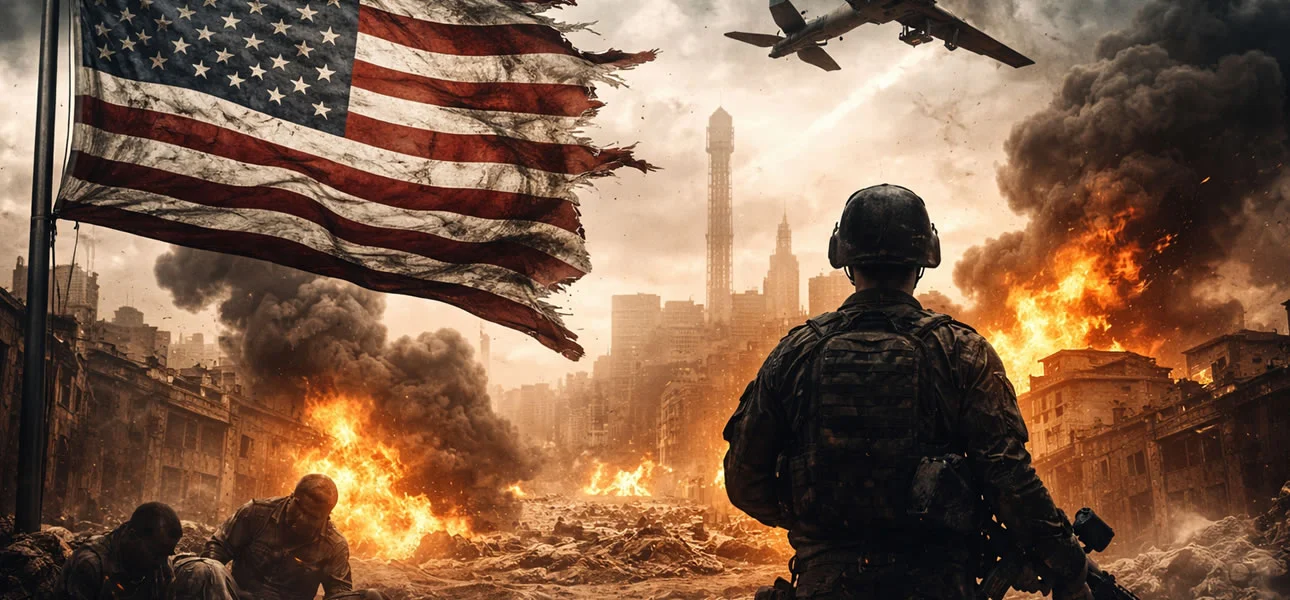
Recent military decisions, particularly those involving Iran, have reignited a critical debate: can a nation claim to uphold democratic values while engaging in actions that appear to contradict them? This article explores that tension—between power and principle, intention and consequence—and challenges readers to reconsider what it truly means to be a force for good in today’s world.
• Introduction: A Question That Demands Reflection
• The Shift from Defender to Aggressor
• The Human Cost: Civilians and Children
• A Violation of Basic Human Decency
• What Would Jesus Christ Say?
• From “Good Guy” to “Bad Guy”
• The Danger of Moral Drift
• A Moment for Accountability
• Conclusions
Since when did the US become the bad guy? It’s a question that feels uncomfortable to ask—but one that deserves honest reflection. For decades, the United States has positioned itself as a global defender of freedom, democracy, and human rights. Many grew up believing America was, if not perfect, at least striving to be a force for good in the world.
But recent actions, particularly military strikes against Iran without a direct attack on American soil, have forced many to reconsider that narrative. When a nation initiates violence without clear provocation—and when that violence leads to the deaths of innocent civilians and children—it raises serious moral questions. ↑
Historically, the United States has justified military action under the banner of defense or preemption. However, attacking a sovereign nation like Iran without being directly attacked first challenges that long-standing justification.
This isn’t just about geopolitics—it’s about perception and principle. When a powerful nation strikes first, it risks crossing a line from defense into aggression. That distinction matters. It shapes how the world sees America and how Americans see themselves.
In this case, the US did not act in response to an immediate, unavoidable threat. Instead, it chose to initiate force. That decision alone marks a significant shift in moral standing. ↑
War is never clean. But when civilians and children become casualties, the moral weight becomes impossible to ignore.
Reports indicate that hundreds of non-combatants have died as a result of these actions. These are not abstract numbers. They are families torn apart, children who will never grow up, and communities left in devastation.
No matter the strategic reasoning, the loss of innocent life should never be treated as collateral damage that can simply be rationalized away. Every civilian death chips away at the moral credibility of the nation responsible. ↑
At its core, this issue is not just political—it is deeply human.
Basic decency demands restraint, compassion, and accountability. Launching attacks that knowingly risk civilian lives contradicts those values. It suggests that power has taken precedence over principle.
When a nation prioritizes dominance over dignity, it risks losing something far more valuable than strategic advantage—it loses its moral compass. ↑
For a country where many leaders and citizens identify with Christian values, it is worth asking: how do these actions align with the teachings of Jesus Christ?
The message of Jesus Christ emphasized peace, mercy, and love for one’s enemies. Turning the other cheek, valuing every human life, and rejecting violence as a first resort were central to his teachings.
Initiating an attack that leads to widespread suffering stands in stark contrast to those principles. It raises a difficult but necessary question: are we living out the values we claim to uphold? ↑
For much of modern history, the United States has been seen—both domestically and internationally—as a “good guy.” Not flawless, but fundamentally aligned with justice and freedom.
That perception is now shifting.
When a nation acts as the aggressor, causes civilian harm, and bypasses moral restraint, it risks becoming the very thing it once opposed. The label of “bad guy” doesn’t emerge overnight—but it grows from actions that contradict stated values.
And perhaps the most troubling part is not how others see the US, but how Americans begin to see themselves. ↑
One of the greatest risks any powerful nation faces is moral drift—the slow erosion of values in pursuit of power or security.
It doesn’t happen all at once. It happens in decisions justified as necessary, in actions explained away as strategic, and in moments where ends are allowed to justify means.
But over time, those choices accumulate. And eventually, they redefine who we are. ↑
So, since when did the US become the bad guy?
There is no single date or event that answers that question. But moments like this—when force is used without clear provocation, when innocent lives are lost, and when moral principles are set aside—bring us closer to that uncomfortable reality.
This is not about condemning a nation. It’s about calling for accountability, reflection, and a return to the values that once defined it.
Because being the “good guy” was never about power—it was about principle. And principles only matter when they are upheld, especially in the hardest moments. ↑